Selections from “The Discourses, Handbook, Fragments” of Epictetus

filosofia-epiktitou

trans. Christopher Gill and Robin Hard

All things obey and serve the universe, both earth and sea, and the sun and the other stars, and the plants and animals of the earth. Our body likewise obeys it, both in sickness and health (when the universe wills) and when young and old, and as it passes through all other changes. It is therefore reasonable also that what depends on ourselves, that is to say, our judgement, should not be the only thing to strive against it. For the universe is powerful, and superior to ourselves, and has taken better counsel on our behalf than we can, by embracing us too in its governance in conjunction with the whole. Moreover, to act against it is to align ourselves with unreason, and achieving nothing but futile harassment, embroils us in pains and sorrows. (Fragments, 3)

Continue reading

Thinking Aristocracy: Phase 1

04-throne_bacchus

What is aristocracy? How can a modern person defend aristocracy as a viable system of government, let alone pretend that an aristocratic regime could be fair and just to all under its control? Do we not all know that, as Churchill famously said, “Democracy is the worst form of government except all the others that have been tried”?

To begin with it is essential that we frame the question adequately. This can be difficult to do, as every modern Western regime has presented itself as “a Democracy”, even the most autocratic and totalitarian; and we have been raised and educated by the state to regard democracy as the only possible just system of government – regardless of outcomes.

The following four short texts, each around 100 pages and three of the four available via Kindle, move from an examination of the origin of the democratic ideal, to the nature of politics itself, to the moral hazards inherent in democracy, and finally to the metaphysical underpinnings of the modern world.

All of this is just scratching the surface. This list is meant as a starting point, not as a full study course. Depending on what kind of feedback I get – if any, I will be happy to recommend more to interested parties.

The Problem of Democracy

by Alain De Benoist

The Concept of the Political

by Carl Schmitt

From Aristocracy to Monarchy to Democracy

by Hans-Hermann Hoppe

The Crisis of the Modern World

by Rene Guenon

Belief

( Perusing my hard drive this morning I happened upon a paper I wrote several years ago on the subject of belief.  While perhaps less complete than it could be, I think it dovetails nicely with yesterday’s post on materialism.  It was not originally written for online publication, and I think this shows in its length and style, but rather to satisfy the needs of a college philosophy course.  Still, it sheds some light on what may follow as a logical followup question from yesterday for some of my readers, namely, “What then, is knowable?”  Properly speaking this is the subject of epistemology and this essay is insufficient to address that question in any depth.  I hope it may be enough to point the reader towards my source material, particularly the work of William James and Martin Heidegger, who cover this subject in a far more insightful and enlightening manner. ) 

Image

Continue reading

Contra Materialism

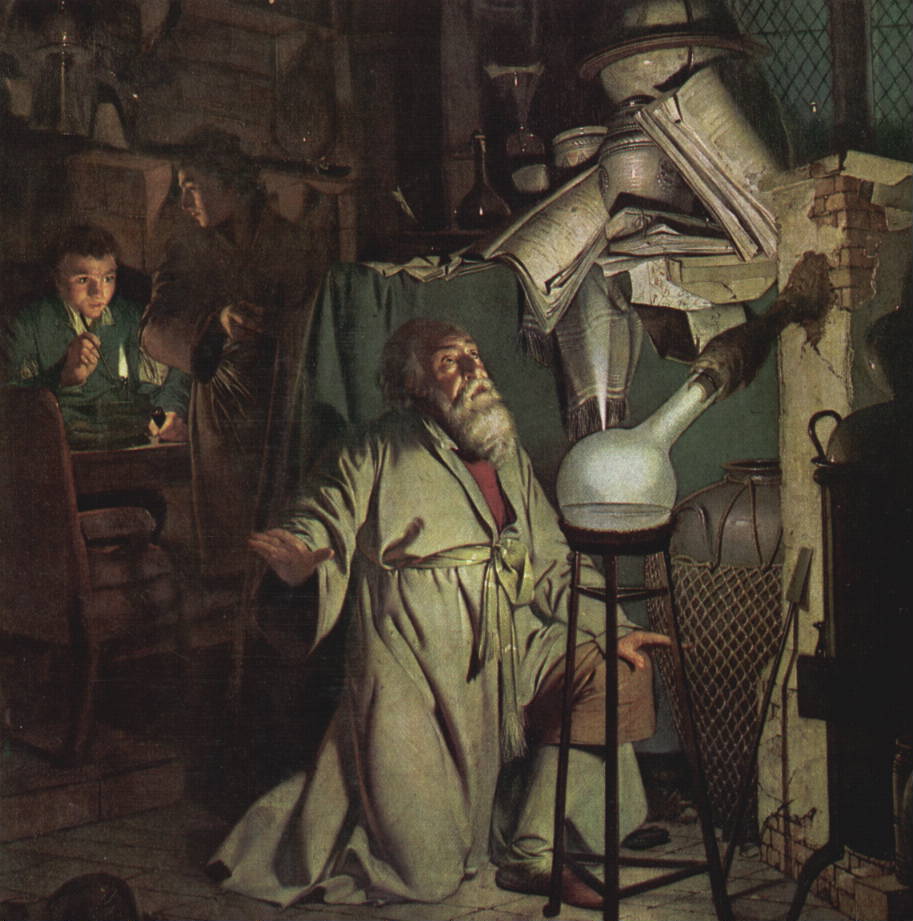
alchemy

Materialism is now the de rigueur assumption underlying any public discussion of the sciences, especially the life sciences thanks to the neo-Darwinist domination of that field.  This is despite the fact that “material monism”, as my old philosophy professor liked to call it – the belief that only matter exists and is real, is falling increasingly out of favor among the “hardest” of the “hard sciences”, like physics.   This popularity has become so widespread that it is becoming increasingly difficult for the reasonably educated layman to imagine a world outside of materialism.

Continue reading

LJ Redux #1

plight

I recently finished reading Georges Dumezil’s Plight of the Sorcerer. I was peripherally familiar with Dumezil’s work when I ordered this volume, having read half of his landmark Archaic Roman Religion. While even half of a Dumezil analysis was enough to convince me of his value, both to the historian and the magician, I was mostly attracted to Plight of the Sorcerer by its title. Naturally, as something of a would-be sorcerer, I was interested in what insights or warnings I could gain from the text. It certainly sounded ominous. “Plight” is not a word that fills one with confidence.

Continue reading

Crowley Paintings

Having seen some Crowley paintings in person, I must say that digital reproductions don’t do them justice.  While Crowley was not primarily a visual artist, they have a presence that many more technically sophisticated works lack.  These photos, however, are high enough resolution to allow you to see the texture of his brushwork and paint application in some of his works.

http://www.aleistercrowley.com.au/#!1gallery/galleryPage

Crowley’s art is something of an acquired taste.  At first, I found his use of color jarring.  Now I find it evocative and magical.

For me, The Moon (1918) is an old favorite (http://www.lashtal.com/images/metz.jpg), which I was fortunate enough to see when some of his paintings toured Los Angeles, so I’m excited to see that he painted another one in 1921.  Honestly, I can’t decide which I prefer.  I like them both too much.    Idiots on a Mountain, Landscape with Coral and Jade Pagodas, and Sunset on the Sicilian Coast (1920), are entirely new delights.

The painting of four robed figures carrying a black goat up a snowy mountain is still one of my all time favorites. Sadly, this photo is really poor, but you get the idea.  (http://www.lashtal.com/portal/resources/thegalleries/aleister-crowley/art/dscf1830-74.html)

It’s a real shame that many of these wonderful and magical artifacts might disappear into a private collection, never to see the light of day again.   I hope whomever purchases these important pieces of Thelemic and occult history will allow them to circulate through galleries and museums at some point in the future.

A New Year

2012 was quite the year for me – both great and terrible.  The last few months were dominated, as many of my friends know, by my summary dismissal from the organization which claims to be the one true OTO, after over 10 years of loyal membership.    That is a phrase which, to be totally honest, I never through I’d use: “one true OTO”.  It implies that there are other valid OTO’s out there.  Presently there are not.   The whole sordid tale will have to wait until another time, but very briefly I’d like to point out that if you look at Crowley’s writing on the subject, it’s very clear that OTO was never meant to be a “California not-for-profit corporation”.   It’s an ideal towards which we aspire.  Perhaps the world is not yet ready for OTO.  Perhaps we, in the Thelemic community, are simply not ready to give the world this model, as we don’t have it ourselves.  Before anything can be born into the world, it first must be carried for a season in the womb of our hearts.  If OTO does not exist within us, it will never exist outside of us.

Continue reading